Chiyo’s orphanhood
Memoirs of a GeishaChiyo’s orphanhood begins not with the deaths themselves, but with the letter that tells her of them after she has already been sent away to Kyoto. The news confirms the loss of both parents and separates her from Satsu, leaving her to rebuild her sense of the past while continuing into an uncertain future.
The news from Yoroido
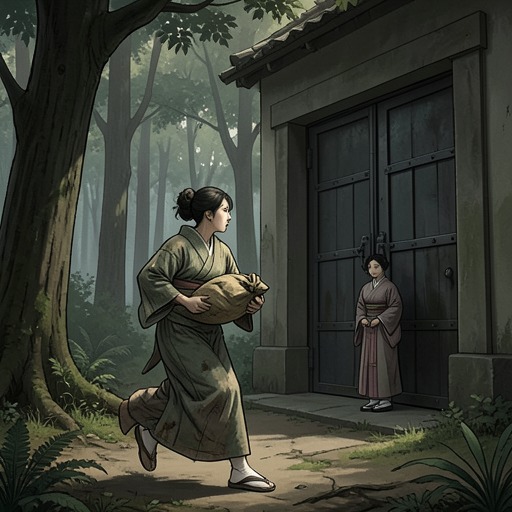
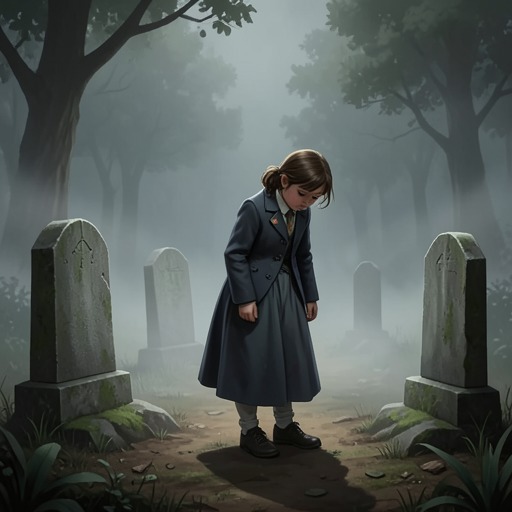
Two seasons after Chiyo left Yoroido, Tanaka Ichiro wrote to tell her that her mother had died six weeks after her departure and her father a few weeks later. He reported that their remains were in the village cemetery, that services had been held at Hoko-ji Temple in Senzuru, and that women in Yoroido had chanted sutras for them. The formal condolences conveyed not only the deaths but the care taken to honor the parents in their home community.
The letter also said that Satsu had passed through Yoroido late in the fall and immediately run away again with the son of Mr. Sugi. Mr. Sugi hoped to see his son again and asked that Chiyo send word if she heard from her sister. In a single message, Chiyo learned that both parents were gone and that her only sibling was beyond her reach.
Grief and the family tablets
Chiyo’s response is physical and overwhelming: her tears flow like water boiling over, and her mind feels like a broken vase that will not stand. She had kept hoping her mother might still be alive, not because she had firm grounds for hope, but because she had so little else to hold on to. The news collapses that fragile possibility along with her remaining connection to the family she left behind.
When she can speak, Chiyo asks Auntie to place the family tablets somewhere she will not have to see them and to pray on her behalf. Auntie refuses, telling her she should be ashamed to turn away from her ancestors. Instead, she helps Chiyo set the tablets on a shelf near the stairwell, where Chiyo can pray before them each morning. The ritual makes remembrance a daily obligation even when grief makes direct participation painful; Auntie insists that the tablets are all that remains of Chiyo’s childhood.
The moth and the turn toward the future
The deaths acquire a second meaning through Chiyo’s memory of a moth she found shortly after being separated from Satsu. She had wrapped it in a rag and hidden it beneath the house. Returning to it, she finds a creature that appears unchanged despite all the changes in her own life. When her fingertip brushes its velvety surface, however, it turns soundlessly to ash.
The moth’s sudden disintegration breaks Chiyo’s sense that the past might remain intact somewhere, waiting to be recovered. She recognizes that her parents are dead and that Satsu is gone, but also that she herself has not disappeared. The image marks a shift from looking backward toward the family she has lost to asking what her future will be. Her orphanhood is therefore both a concrete bereavement and a threshold in her sense of self: the losses cannot be undone, but they force her attention toward a life still to come.